
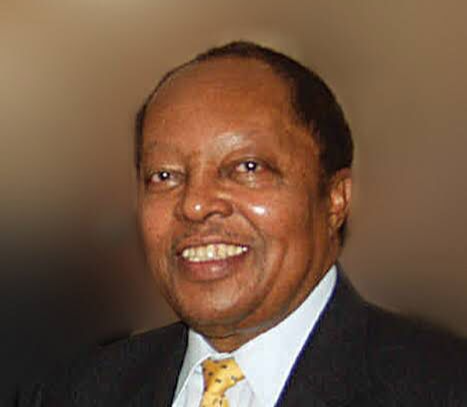
Sibusiso Mandlenkosi Emmanuel Bengu (1934-2024) (92 yo)
Biography
South Africa mourns the loss of Sibusiso Mandlenkosi Emmanuel Bengu, a distinguished academic and influential politician who served as the first post-apartheid Minister of Education. He passed away on 30 December 2024, at the age of 90.
Born in Kranskop, Natal Province, on 8 May 1934, Sibusiso's early life was rooted in faith, as the son of a Lutheran minister and the nephew of the renowned evangelist Reverend Nicholas Bhengu. He pursued his higher education at the University of South Africa, earning Bachelor's and Honours degrees in History in 1966, and later a PhD in Political Science from the Graduate Institute of International Studies in Geneva in 1974.
Bengu dedicated the early part of his career to education, beginning as a teacher in 1952. His commitment to shaping young minds led him to found the Dlangezwa High School near Empangeni in 1969, where he served as the inaugural principal until 1976. He then became the director of student affairs at the University of Zululand in 1977.
His involvement in the political landscape of South Africa deepened in 1975 when he became the inaugural secretary-general of Inkatha, founded by Mangosuthu Buthelezi. However, differing views led to his departure and self-imposed exile in Geneva from 1978 to 1991. During this time, he contributed his expertise as the secretary for research and social action at the Lutheran World Federation.
Returning to South Africa during the pivotal negotiations to end apartheid, Bengu made history as the first black vice-chancellor of the University of Fort Hare, a position he held from 1991 to 1994. His growing alliance with the African National Congress (ANC), fostered through a friendship with Oliver Tambo, saw him stand as an ANC candidate in the historic April 1994 general election.
Following the dawn of democracy, Sibusiso Bengu was appointed as the first post-apartheid Minister of Education in President Nelson Mandela's cabinet (1994-1999). In this crucial role, he spearheaded significant and often debated reforms to South African education policy, including a nationwide teacher redeployment program and the introduction of outcome-based education under Curriculum 2005.
After leaving government in June 1999, Bengu continued to serve his country as the South African Ambassador to Germany until his retirement in 2003. His dedication to the ANC was further demonstrated through his membership in the party's National Executive Committee from 1994 to 2002.
Sibusiso Bengu will be remembered for his pioneering role in transforming South Africa's education system and his unwavering commitment to the pursuit of a more just and equitable society. His contributions as an educator, political leader, and diplomat have left a lasting impact on the nation.